When you walk into a preschool, what is the first thing you notice? Is it the colorful walls? The tiny chairs? The sound of laughter?
In early childhood education, we have a saying: “The Environment is the Third Teacher.” (The first two are the parents and the educators).
A child’s surroundings dictate how they feel, and how they feel dictates how they learn. If a child feels intimidated, their brain goes into “survival mode.” If they feel safe and inspired, their brain opens up to “learning mode.”
Here is why a Friendly and Creative Environment isn’t just a “nice-to-have”—it is essential for your child’s brain development.
1. The “Friendly” Factor: Emotional Safety First
Before a child can learn ABCs, they must feel safe. But for a toddler, “safety” doesn’t just mean security guards and CCTV (though those are critical).
Emotional Safety means:
-
The “Eye-Level” Rule: Teachers who sit on the floor to talk to children, rather than standing over them. This simple act builds trust and removes fear.
-
Mistake-Friendly Culture: A classroom where spilling water or coloring outside the lines is met with help, not scolding. This encourages children to try new things without the fear of failure.
-
Warm Transitions: How does the school handle drop-offs? A friendly environment has a gentle transition policy to help children cope with separation anxiety.
Parent Tip: When visiting a school, watch the children’s faces. Are they making eye contact with the teachers? That is the biggest sign of a friendly environment.
2. The “Creative” Factor: Sparking Imagination
A creative environment is not just about having art supplies; it’s about Open-Ended Play.
Standard toys have one way to be used (e.g., a car moves forward). Creative tools can be anything. In our environment, we prioritize:
-
Sensory Walls: Textures like rough, soft, bumpy, and smooth that stimulate neural pathways in the brain.
-
Role-Play Corners: A mini-kitchen, a doctor’s set, or a puppet theatre. These aren’t just toys; they are tools for “Social Rehearsal.” Children act out real-life scenarios, which builds empathy and vocabulary.
-
Accessible Learning: Shelves are open and low. Children don’t have to “ask” for a book; they can choose it themselves. This small design choice builds independence.
3. Designing for Curiosity (The “Yes” Environment)
Toddlers hear the word “No” a lot. “Don’t touch that,” “Don’t climb there.”
A truly creative preschool is designed as a “Yes” Environment.
-
Yes, you can paint with your fingers.
-
Yes, you can build a tower as high as you.
-
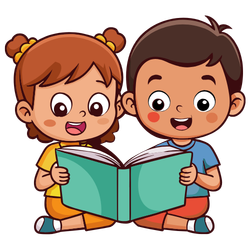
Yes, you can lie on the mat and read.
When the furniture is child-sized, the corners are rounded, and the materials are non-toxic, we don’t need to say “No” as often. This freedom allows a child’s creativity to bloom naturally.
4. Checklist: Does Your Preschool Have This?
If you are touring schools right now, look for these signs of a healthy environment:
-
[ ] Display of Work: Are the walls covered with “perfect” teacher-made art, or the “imperfect” scribbles of the children? (Hint: The messy scribbles show real learning!)
-
[ ] Natural Light: Is the space bright and airy, or dark and enclosed?
-
[ ] Quiet Corners: Is there a cozy corner with cushions where a child can go if they feel overwhelmed and need a break?
-
[ ] Hygiene: Is the space clean but “lived-in”? A classroom that is too tidy might mean the kids aren’t allowed to play freely.
Conclusion
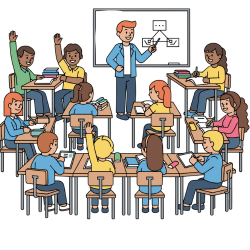
A desk and a blackboard do not make a school.
A school is a space where a child feels brave enough to let go of your hand and explore the world. It is a space that says, “You belong here, and your ideas matter.”
Want to feel the vibe for yourself? Come visit our campus. Walk through our sensory corridors, meet our smiling staff, and see why children refuse to go home when school is over!