
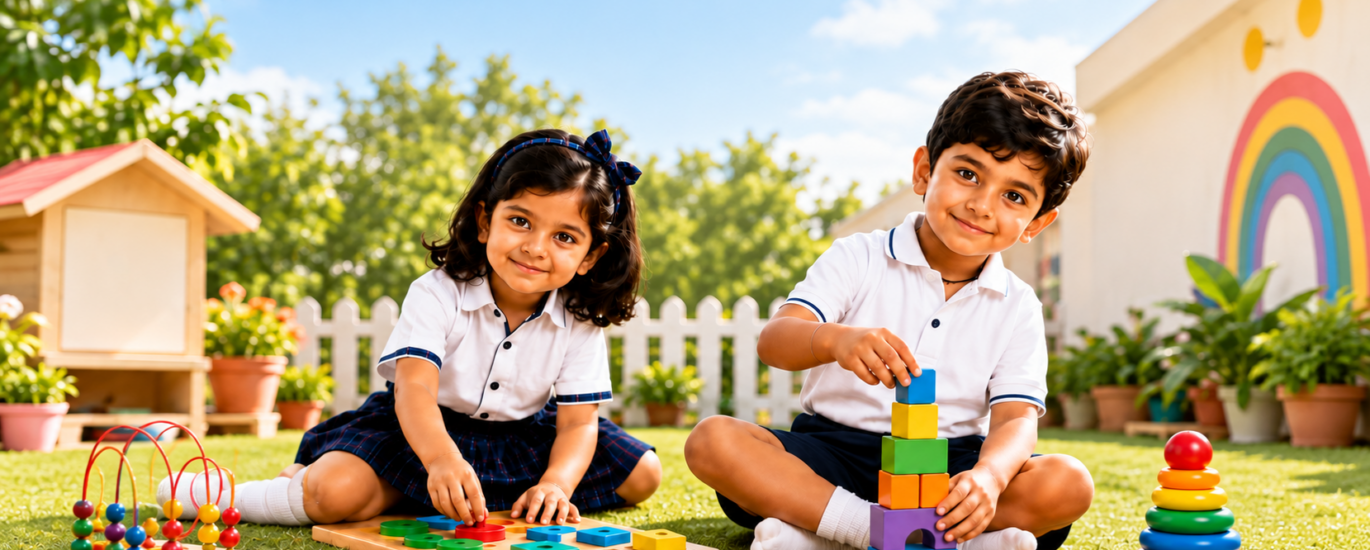
Education in India is shifting toward methods that value active engagement. Play-based learning at Pencil Pod Preschool in Wakad nurtures a child’s natural curiosity and encourages children to learn through meaningful experiences. Structured activities in daily routines help parents and educators create supportive environments where children can build confidence, develop creativity, and thrive.
This approach turns traditional instruction into an interactive experience. Through learning through play, children build cognitive tools that can guide them throughout life. These experiences build confidence and help young minds explore complex ideas safely.
Beyond simple fun, this method sparks innovation. It encourages students to solve challenges in new ways and strengthens their problem-solving abilities. Using Learning through play in Wakad helps the next generation adapt to a changing world.
With play-based learning, families can connect academic goals with children’s developmental needs. This article explores how these strategies build a foundation for future success.
Key Takeaways
- Encourages natural curiosity and active student engagement.
- Builds lasting self-confidence through safe exploration.
- Enhances creative thinking by allowing children to experiment.
- Strengthens problem-solving skills through hands-on challenges.
- Supports holistic development for children in modern India.
What Play-Based Learning Means for Child Development
At the heart of a high-quality play-based preschool in Wakad lies the belief that children build their own knowledge. Instead of passive lessons, children explore their surroundings through meaningful, hands-on experiences.
Learning Through Play as an Active, Child-Centered Process
This approach moves learning from teacher-led instruction to child-led discovery. When children choose activities, they become deeply invested in their results. This freedom encourages them to explore, test hypotheses, and solve problems in real time.
In Indian classrooms, this approach replaces rote memorization with interactive centers. By building with blocks or exploring local natural materials, children connect abstract concepts with daily life.
How Play Supports Social, Emotional, Cognitive, and Physical Growth
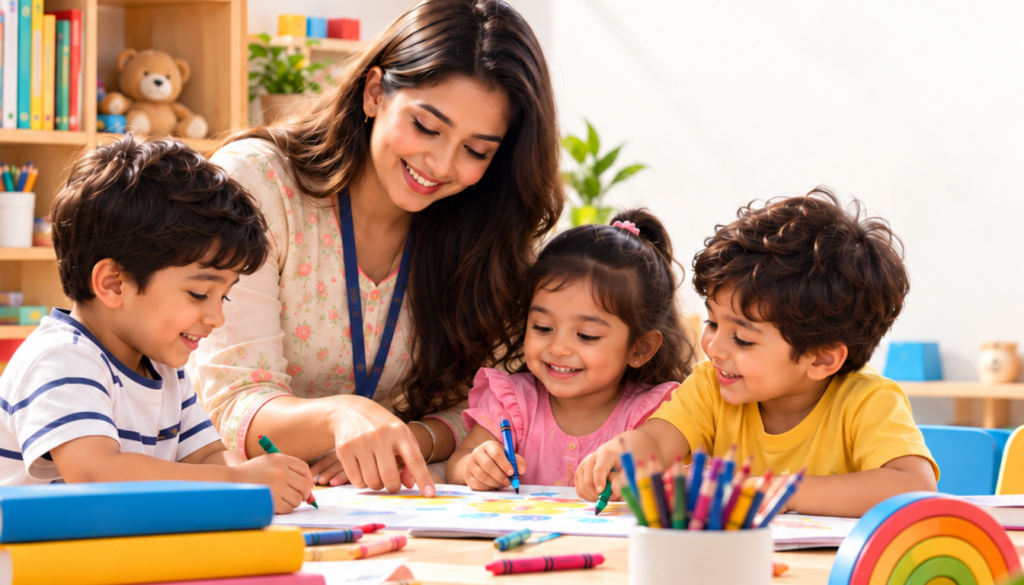
Play is the main way children develop during the early years. It helps children practice social skills, such as negotiation and empathy, while joining group activities. Cognitive growth happens as children sort objects, recognize patterns, and build language through storytelling.
Active play builds fine and gross motor skills. Threading beads and running on a playground support brain development. It also nurtures Emotional resilience as children manage frustration when towers fall or games fail.
The Educator’s Role in Guiding Exploration Without Taking Over
In a play-based preschool in pune, the teacher guides learning as a facilitator, not a director. Educators observe each child’s interests and provide tools that extend learning. They ask open-ended questions that encourage deeper thinking without giving answers right away.
By creating a supportive environment, teachers keep play purposeful and connected to developmental goals. This balance helps children feel safe while taking risks needed for growth. Ultimately, the educator partners with each child, respecting their unique pace and perspective.
How Play-Based Learning Builds Confidence and Independence
When children engage in play-based learning activities, they build independence and confidence. These experiences help them explore their world with purpose. By leading their discoveries, children learn to trust their instincts and abilities.
Giving Children Choice, Agency, and Ownership of Their Learning
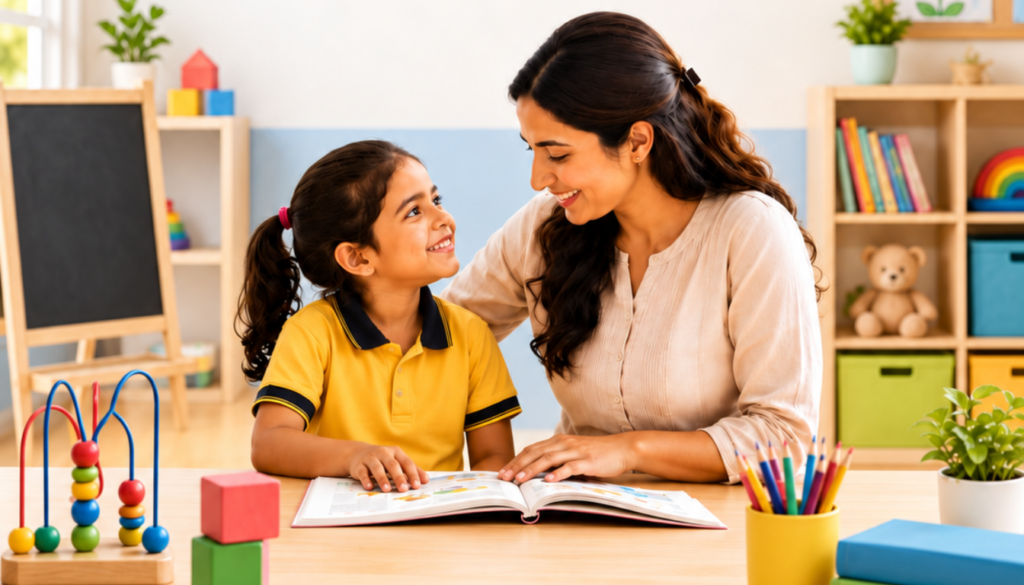
Agency is a key part of a child’s development. When children choose materials or solutions, we show that their views matter. This ownership turns passive observers into active participants in their education.
In many Indian classrooms and homes, this model helps children manage their tasks. They learn that their ideas matter and that they can guide their focus. This freedom helps build a strong, resilient sense of self.
Building Confidence Through Safe Risk-Taking and Trial and Error
Confidence grows when children see mistakes as part of learning. Through play-based learning activities, they can test hypotheses in a safe setting. While building a tower or sorting shapes, they adjust strategies when plans fail.
Experimenting teaches children that failure can become a valuable lesson. Trial and error helps them build grit for harder challenges later. They see obstacles as puzzles to solve instead of reasons to quit.
Strengthening Communication, Collaboration, and Self-Expression
Play creates a natural space for social interaction. When children share a goal, they explain their thoughts and listen to others. This teamwork strengthens communication skills in a meaningful way.
- Negotiation: Learning to compromise during group play.
- Articulation: Expressing needs and ideas clearly to peers.
- Empathy: Understanding the perspectives of others during shared tasks.
Using Encouragement Instead of Praise That Creates Pressure
Adult responses to a child’s work can shape motivation. Instead of praising results, effective play-based learning activities use specific encouragement. This approach recognizes effort, strategy, and persistence.
| Focus Area | Pressure-Based Praise | Growth-Oriented Encouragement |
|---|---|---|
| Problem Solving | “You are so smart!” | “I noticed how you tried three different ways to fix that.” |
| Creativity | “That is the best drawing ever.” | “You used such bright colors to show your feelings.” |
| Persistence | “You finished so fast!” | “You kept working even when it got difficult.” |
By focusing on the process, we help children value their growth. This change lowers fear of judgment and builds a lifelong love for learning. Supported children become more willing to explore, create, and innovate.
How Play Sparks Creativity and Imagination
Creative thinking is not a talent children are born with. They build it through active play and varied experiences. These experiences help children see many viewpoints and show the benefits of play-based learning.
Open-Ended Materials That Invite Multiple Solutions
Open-ended materials let children experiment without fearing failure. Wooden blocks, clay, and recycled cardboard have no single “correct” use. They invite children to invent structures and stories, building confidence in their own ideas.
Combining Storytelling, Art, Music, Movement, and Pretend Play
Different forms of expression help children connect ideas. When a child acts out a story with rhythmic movements, they combine language, physical coordination, and emotional intelligence. This broad approach shows how the benefits of play-based learning support every area of development.
Why Unstructured Time Supports Original Thinking
Unstructured time gives children space for reflection and original thought. When adults step back, children use their own resources to solve problems and create games. This independence builds the resilience they need for complex challenges later in life.
Examples of Creative Play-Based Learning Activities
Thoughtfully planned activities protect a child’s freedom while guiding creative growth. The table shows how materials can spark imagination at home and in classrooms.
| Activity Type | Materials Used | Creative Outcome |
|---|---|---|
| Building Challenges | Blocks and Fabric | Spatial reasoning and design |
| Imaginative Drama | Costumes and Props | Empathy and narrative skills |
| Sensory Art | Clay and Natural Objects | Fine motor and aesthetic sense |
| Musical Exploration | Homemade Instruments | Rhythm and auditory awareness |
How Play Develops Problem-Solving and Critical-Thinking Skills
Play-based learning gives children a natural lab for handling complex challenges. As children choose activities, they move past watching and begin changing their surroundings. This work builds a strong base for logical reasoning and analytical thought.
Learning to Plan, Test Ideas, and Adapt Strategies
When children start a project, they picture the goal and plan the steps to reach it. This early planning is a key part of effective play-based learning. If a block tower leans, the child must quickly test new ideas and change the plan.
Trial and error shows children that failure is simply a data point. They compare choices and change their approach based on results. This flexibility in thinking supports later academic success.
Using Puzzles, Construction, Games, and Real-World Challenges
Puzzles and construction sets provide quick feedback that builds critical thinking. When a piece fails to fit, children rotate it, study it, and rethink their spatial logic. Repeated practice turns abstract ideas into hands-on skills children can master.
Real-world challenges, such as organizing a play area or sharing resources during a game, require high-level problem-solving. Children must agree on rules and find compromises that keep play moving. They learn to evaluate consequences and make informed decisions in real-time.
Developing Persistence When Activities Do Not Go as Planned
Persistence grows when children face obstacles during play-based learning. When a game gets hard or a project fails, children can practice emotional regulation. Rather than quit, they learn to persevere and try a new angle.
Resilience grows when adults let children struggle briefly without stepping in. By handling small frustrations, children build the grit needed to tackle larger academic problems. They start seeing challenges as puzzles to solve, not reasons to quit.
Questions Adults Can Ask to Extend Children’s Thinking
Adults can support this growth with open-ended questions that prompt deeper thought. These prompts help children explain their thinking without receiving the answer.
- What do you think will happen if we try this approach instead?
- How can we change our plan to make this part work better?
- What have you noticed about the way these pieces fit together?
- If this doesn’t work, what is another way we could solve this problem?
Creating Effective Play-Based Learning Experiences at Home and School
Practical strategies help educators and parents build curiosity through meaningful play-based learning activities. With careful planning, any space can become an active classroom that supports natural discovery.
Designing Supportive Play Areas for Different Ages and Abilities
A well-designed space should be safe and accessible for every child. For younger toddlers, use soft textures and low shelves for independent toy access. Older children benefit from zones for construction, art, and quiet reading.
Organize materials by category to help children make choices. Flexibility is key, so furniture should move for group projects or individual exploration.
Adapting Play-Based Preschool Activities to Indian Classrooms and Homes
In many Indian settings, space is limited, but learning through play remains effective. Use vertical wall space for displays or floor mats for activity zones. Local cultural elements, such as traditional stories or regional crafts, make learning more relatable.
Teachers and parents can share resources so every child can use quality tools. In crowded classrooms, small groups can rotate through stations and stay focused.
Balancing Child-Led Exploration With Learning Goals
Give children freedom to follow their interests while keeping learning goals in mind. Introduce themes or materials that match developmental milestones. Then let children lead and decide how to use those items.
Low-Cost Play-Based Learning Activities Using Everyday Materials
You do not need expensive toys to support deep engagement. You can create many play-based learning activities with items found at home or school:
- Cardboard boxes: Perfect for building forts, tunnels, or creative structures.
- Pulses and grains: Excellent for sensory bins and early counting exercises.
- Old newspapers: Ideal for paper-mache art or building large-scale models.
- Plastic bottles: Useful for DIY bowling games or water-pouring experiments.
Observing Progress Without Interrupting Meaningful Play
Observation helps you understand a child’s growth. Watch from a distance and note how they solve problems or interact with peers. Avoid stepping in unless the child asks for help or safety becomes a concern.
Documenting these moments gives you useful insights into development. This approach keeps learning through play child-centered and respects each child’s pace and style.
Conclusion
Children grow when they can explore their world through active play. A high-quality play-based preschool turns simple curiosity into a lifelong love of discovery. This approach builds key skills for success in a fast-changing global world.
Parents and educators in India can shape these early experiences. When you support child-led exploration, you build a steady base for confidence and critical thinking. Building, imagining, and solving problems each help your child grow.
Treat these activities as an investment in your child’s potential, not a break from formal academics. A well-structured play-based preschool balances guidance and freedom, so each student feels supported. Use these ideas in daily routines to see greater independence and joy in your child.
Share your experiences with local community groups or educational forums to inspire others. Your commitment to this approach helps create a brighter, more capable generation. Begin today to unlock the limitless imagination within every child.
About PencilPod Preschool
PencilPod Preschool in Wakad provides a nurturing and engaging environment where children learn through play, exploration, and hands-on activities. Our play-based learning approach encourages curiosity, creativity, confidence, communication, and problem-solving skills, helping children build a strong foundation for their future learning journey.