

Storytelling for kids is a great way to help them grow their language skills. When you tell tales, you lay the groundwork for their future success. This simple act helps them learn new words and feel more confident when speaking.
Regular storytelling lets young ones share their thoughts more easily. Active listening and building sentences become part of their daily life. Through new stories, they learn to share complex feelings and organize their thoughts.
This article shows how fun activities can improve talking skills. We’ll see how to turn everyday moments into chances for growth. Get ready to learn how these creative habits help your preschooler communicate better.
Key Takeaways
- Daily narrative sharing significantly boosts a child’s vocabulary and verbal range.
- Consistent practice builds the self-assurance required for public speaking and social interaction.
- Learning to sequence events helps children organize their thoughts and share ideas clearly.
- Creative play allows preschoolers to identify and express their emotions effectively.
- Active listening skills are improved through the shared experience of reading and discussing books.
Why Storytelling Supports Early Communication Development
Storytelling is key for preschoolers’ language growth. It connects simple sounds to complex language. This makes abstract ideas real and relatable.
How Stories Turn New Words Into Meaningful Language
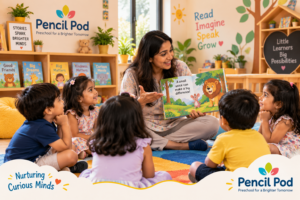
Children often struggle with new words. But storytelling for preschoolers makes these words come alive. For example, “courageous” becomes meaningful when used to describe a lion facing a challenge.
Stories give words a context. This way, children learn to use them in conversations. They don’t just memorize words; they understand their meaning.
Why Listening to Stories Builds Understanding
Listening is crucial for communication. Stories help children connect words with outcomes. They learn how choices lead to consequences.
- Cause and Effect: Understanding why a character acts a certain way.
- Emotional Intelligence: Recognizing feelings like joy, fear, or surprise.
- Predictive Thinking: Guessing what might happen next based on clues.
How Story Narratives Help Children Organize Their Thoughts
Narratives are like mental maps for young minds. They follow a plot, learning to sequence their thoughts. This is key for clear communication.
Beginning, middle, and end as a simple communication framework
The three-part structure helps children organize information. They learn to structure their own stories. This makes their communication logical and easy to follow.
Characters, problems, and solutions as prompts for discussion
Characters drive the plot, encouraging problem-solving. When a story presents a dilemma, children can suggest solutions. This boosts their confidence and communication skills.
| Narrative Element | Communication Benefit | Skill Developed |
|---|---|---|
| Characters | Identifying perspectives | Empathy |
| Problems | Analyzing challenges | Critical thinking |
| Solutions | Formulating answers | Clear expression |
How Storytelling for Kids Builds Vocabulary and Clear Expression
Storytelling is a key way for kids to learn new words. Through stories, they hear words they don’t use every day. This helps them grow their vocabulary and speak more clearly.
Learning Descriptive Words Through Characters and Settings
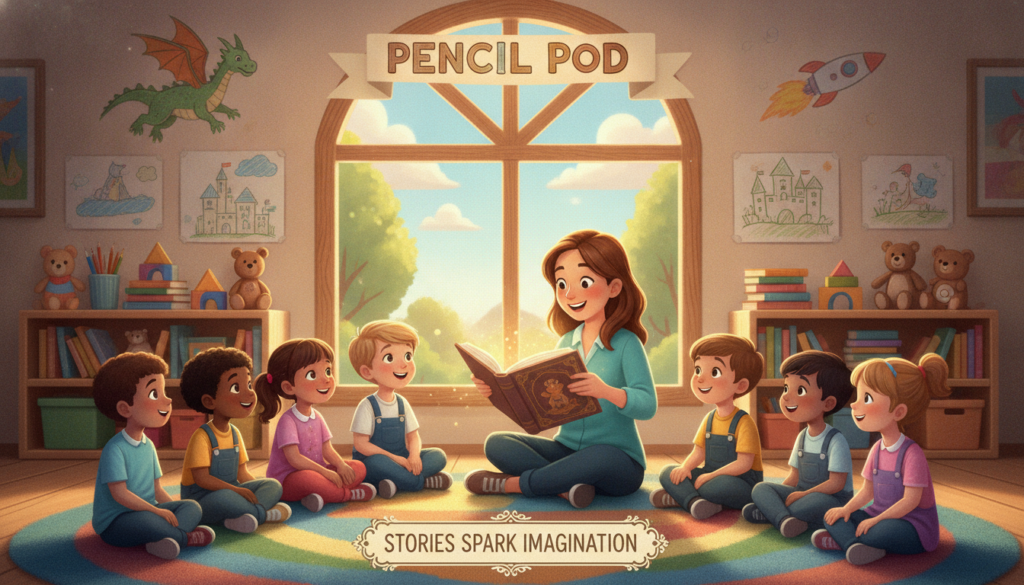
Stories are full of words that describe things in detail. For example, a “mysterious, foggy forest” or a “brave, golden-maned lion.” These words help kids imagine and use their own words better.
Practicing Complete Sentences and Specific Details
Grown-ups help by showing how to make complete sentences. Instead of just yes or no, ask for more details. For instance, “What color were the dragon’s scales?” or “How did the character feel when they found the treasure?”
Using Repetition to Reinforce New Words
Repeating words helps kids learn them better. When they hear the same words in different stories, they start to understand them better.
Repeating key phrases without making practice feel like a lesson
Make repetition fun by using it in playful ways. Keep it fun and not like schoolwork. When kids hear a fun phrase over and over, they might start using it too.
Connecting story vocabulary to everyday experiences at home and school
Use story words in real life to help kids connect them to their world. If a book says a character was “frustrated” and your child feels the same, use that word. It helps them understand and express their feelings better.
Encouraging Children to Explain Feelings, Actions, and Ideas
The goal is to help kids share their thoughts and feelings confidently. Encourage them to tell their own versions of stories. Ask open-ended questions to help them think critically and share their own views.
Communication Skills Children Develop Through Storytelling
Sharing stories helps kids build important social and speaking skills. They learn to process and respond to information. These storytelling skills for kids in Wakad, Pune are key for their future success in school and social life.
Listening and Taking Turns During Shared Storytelling
Listening well is the first step in any good conversation. When kids listen to a story, they learn to wait for their turn. This teaches them that talking is a two-way process that needs patience and attention.
Asking and Answering Questions With Confidence
Encouraging kids to ask about the story helps them connect deeply. When they answer, they practice speaking clearly. This back-and-forth builds their verbal fluency for everyday life.
Retelling Stories in a Logical Sequence
Retelling a story helps kids remember events in the right order. This strengthens their ability to organize information logically. It’s a key part of storytelling skills for kids in Wakad, Pune.
Using picture prompts to support children who need extra guidance
Visual aids like flashcards or pictures can guide a child’s story. These prompts help kids who might struggle to remember details. By looking at a picture, they can easily find the next part of the story and keep their narrative flow steady.
Accepting different retellings while focusing on clear meaning
It’s important to value a child’s unique view when retelling a story. Even if they change small details, focus on if the main message is clear. This encourages creativity while keeping coherent communication important.
Building Confidence in Speaking With Others
Regular practice in a safe space helps kids feel more comfortable sharing. As they get more experience, they become more willing to speak up. This confidence comes from the positive feedback they get during storytelling.
Understanding Emotions, Tone, and Nonverbal Communication
Stories are full of emotional cues that teach kids about feelings. By watching facial expressions and gestures, they learn how tone of voice changes words’ meaning. These nonverbal signals are as important as words for effective communication.
| Skill Area | Primary Benefit | Developmental Outcome |
|---|---|---|
| Active Listening | Improved focus | Better turn-taking |
| Logical Sequencing | Structured thinking | Clearer explanations |
| Nonverbal Cues | Emotional awareness | Enhanced empathy |
| Verbal Expression | Vocabulary growth | Increased confidence |
Storytelling Activities for Preschoolers at Home and in the Classroom
Turn any ordinary afternoon into a magical adventure with simple storytelling activities for preschoolers in Wakad, Pune. These activities make language real and fun for kids. They get to play and learn new words and sentences.
Picture-Based Storytelling With Everyday Objects
Use items like a wooden spoon, a colorful scarf, or a small toy car for stories. Ask your child to tell a tale about their chosen object. This creative exercise helps kids build sentences and connect words to things they see.
Story Sequencing With Cards, Drawings, or Family Photos
Visual aids are great for storytelling activities for preschoolers to learn order. Arrange family photos or draw simple pictures of a day. Ask the child to put them in order, teaching them about stories’ start, middle, and end.
Role-Playing Characters to Practice Dialogue
Acting out stories lets kids try different roles and practice talking. It helps them learn to start conversations and respond well.
Using puppets to make shy children more comfortable speaking
Puppets help shy kids feel more at ease when speaking. They can speak through a puppet, feeling less pressure. This way, they practice complex sentences in a safe space.
Changing voices and facial expressions to explore tone
Encourage kids to use different voices and expressions for their characters. This teaches them about tone and emotion. It’s a fun way to learn empathy and nonverbal skills.
Collaborative Storytelling Games for Small Groups
In class, try a “round-robin” story where each child adds a sentence. These storytelling activities for preschoolers promote teamwork and listening. They build a sense of community and success together.
Tips for Adapting Storytelling Activities for Different Language Levels
Every child learns at their own pace. Keep your expectations flexible. Use storytelling activities for preschoolers that include everyone, making sure all feel successful.
Supporting multilingual preschoolers with gestures and visual cues
Use hand signals, pointing, and facial gestures for new words. These cues help multilingual kids follow the story without knowing every word. Consistency in these gestures boosts their confidence.
Giving children enough wait time to form their responses
Be patient with developing speakers. Wait five to ten seconds after asking a question. This extra time lets kids think and respond clearly, improving their speaking.
Conclusion
Building strong communication skills starts with simple, joyful interactions. Storytelling activities for kids help grow vocabulary and improve expression. These moments teach children to listen well and take turns.
They also learn to organize their thoughts in a logical way. Emotional intelligence grows when kids share stories about their feelings and experiences. This practice at home or in school makes everyday talk a powerful learning tool.
By asking open-ended questions and encouraging creative role-play, you create a safe space for growth. Small, playful storytelling activities for kids build lasting confidence in young speakers. Every conversation is a chance to refine language and deepen connections.
Start today by turning your next shared book or family memory into an interactive adventure for your child.
About Pencil Pod
Pencil Pod is a nurturing preschool in Wakad, Pune, focused on creating a joyful and engaging learning environment for young children. Through storytelling, play-based activities, and interactive learning, children develop communication, creativity, confidence, and essential social skills.
With a child-friendly approach, Pencil Pod helps preschoolers build a strong foundation for their future learning and development.