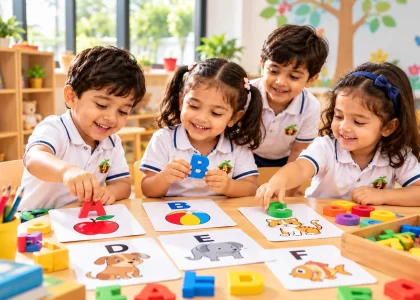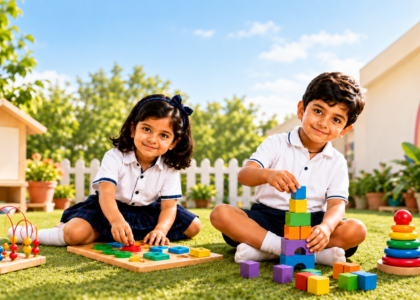
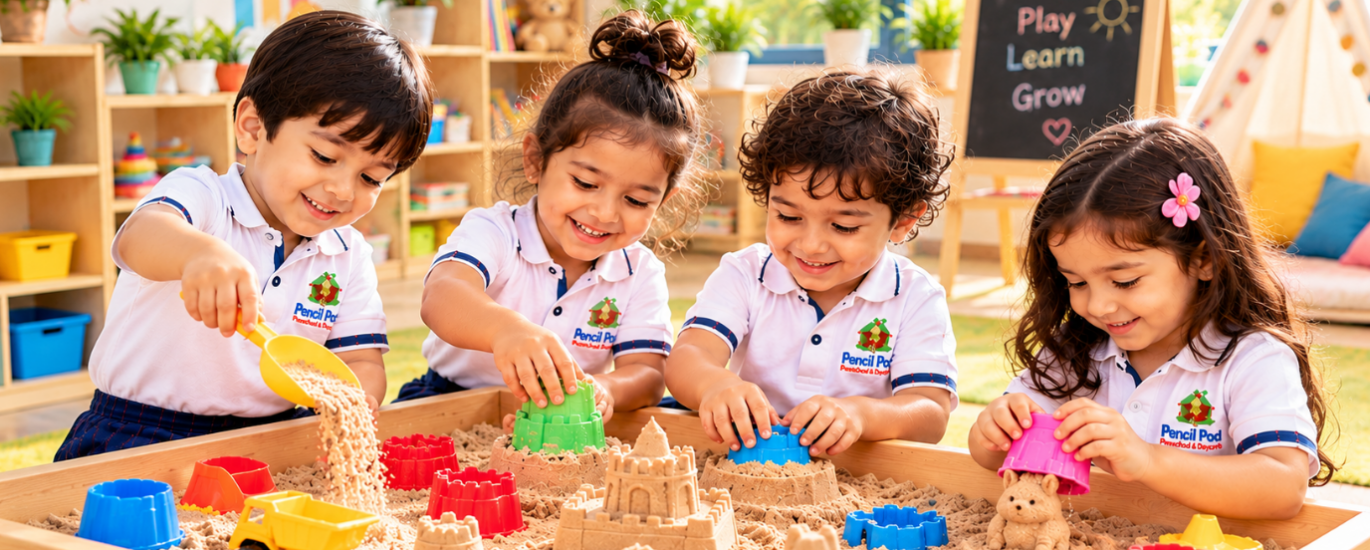
Children learn best when they explore their surroundings with their hands. These practical learning experiences engage touch, sight, sound, and movement while building key thinking skills. Simple items, such as rice, water, and colorful fabric, make sensory play activities easy to enjoy at home or in a preschool setting in Wakad, Pune.
Young children gain much from exploring textures and colors during their early years. Soft dough and bright paint help build motor skills and support emotional control. Adult supervision remains vital for safe, age-appropriate sensory activities for toddlers. Parents and teachers can introduce sensory play ideas for toddlers using simple, child-friendly materials.
Match each task to the child’s developmental stage to keep interest high and support growth. With the right tools, children can explore their world with greater confidence. Sensory play for preschoolers and engaging sensory activities for preschoolers can turn everyday moments into meaningful milestones for growing minds. At PencilPod Preschool in Wakad, Pune, sensory-based learning helps children develop essential skills through fun and hands-on exploration.
Key Takeaways
- Hands-on exploration supports vital cognitive and motor skill development.
- Common household materials like rice and water offer excellent learning opportunities.
- Safety is the top priority during all interactive sessions with young children.
- Customizing tasks to match a child’s age ensures better developmental outcomes.
- Adult guidance helps turn simple exploration into a structured educational experience.
Why Sensory Play Supports Early Learning
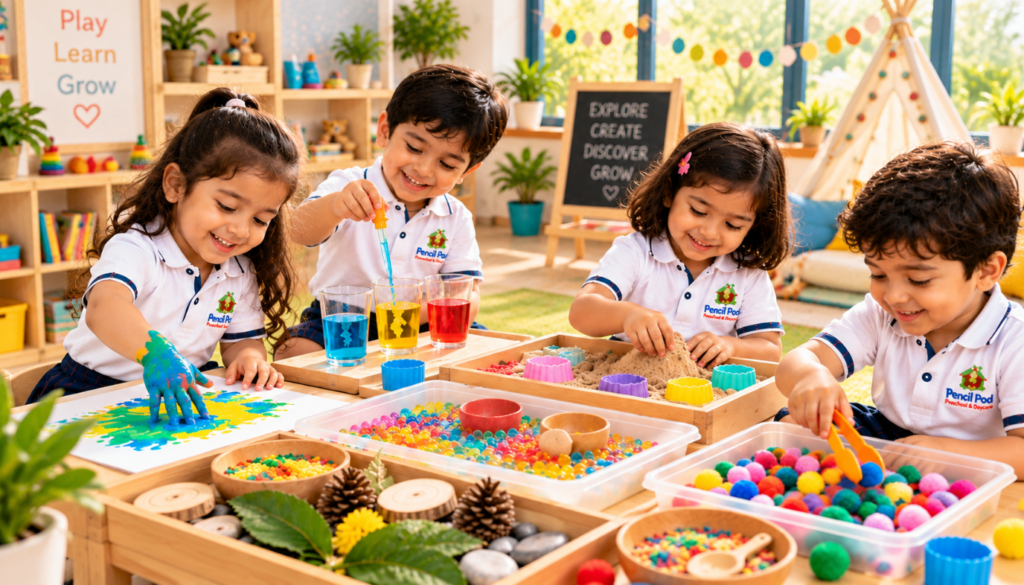
Sensory play activities support cognitive and physical growth in young children. They use touch and other senses to help children explore their surroundings and build brain skills. Parents and educators can use these experiences to deepen children’s understanding of the world.
How sensory activities build fine motor skills and coordination
Grasping, scooping, and pinching strengthen the small muscles in children’s hands. Pouring water and molding clay improve their hand-eye coordination and dexterity. These skills prepare children for writing and using utensils.
Regular practice with different materials helps children control their movements. This progress builds confidence as they handle objects with different sizes and weights. These activities support physical development in early childhood.
Ways sensory play encourages language, problem-solving, and creativity
Sensory play ideas invite children to compare textures and predict what may happen next. While exploring, children use descriptive words to share their discoveries with others. This turns simple play into a rich language-building opportunity.
Children learn to test solutions when play presents a challenge. If a scoop cannot move a pile of sand, they may choose a larger tool. This builds critical thinking and creative problem-solving in a low-pressure setting.
Choosing age-appropriate activities for toddlers and preschoolers
Toddlers benefit from large, simple materials that are safe to explore. They are learning to interact with their surroundings, so simple tasks help them focus. Large spoons and cups build basic skills without causing frustration.
Preschoolers can handle more complex combinations and imaginative challenges. They can follow simple rules and join structured experiments that require patience. Matching the difficulty to each child keeps them engaged and challenged as they grow.
Simple Sensory Play Activities for Everyday Learning
Everyday learning becomes an adventure when you add basic sensory play activities to your daily routine. These experiences need no expensive toys or complex setups. Common household items can create a rich space that supports your child’s thinking and physical growth.
Rainbow rice scooping and sorting
Materials, setup, and developmental skills
To make rainbow rice, dye dry rice with food coloring and vinegar, then let it dry completely. Put the colorful grains in a large plastic bin with scoops, funnels, and small bowls. This activity builds visual discrimination as children sort colors into separate containers.
Make sure your child has passed the stage of mouthing objects before using loose rice. Used safely, these sensory play ideas improve hand-eye coordination and patience during independent play.
Homemade playdough shapes and pretend food
Ways to add colors, scents, and tools safely
Homemade playdough strengthens finger muscles through kneading, rolling, and pinching. Add a few drops of food-grade essential oils for scent or natural dyes for bright colors. Plastic cookie cutters and rolling pins encourage imaginative pretend play as children create their own culinary masterpieces.
Texture-matching bags for touch exploration
Prompts that encourage children to describe what they feel
Texture bags offer tactile discovery without a mess. Fill clear, sealed bags with cotton balls, sandpaper, silk fabric, or dried beans. Ask questions like, “Is it rough or smooth?” or “Does this feel soft or prickly?”
These sensory play ideas build vocabulary while children focus on touch. Comparing textures helps them categorize the world through physical interaction.
| Activity | Primary Skill | Best Age |
|---|---|---|
| Rainbow Rice | Visual Sorting | 2+ Years |
| Homemade Playdough | Fine Motor Strength | 18 Months+ |
| Texture Bags | Tactile Awareness | 12 Months+ |
Mess-Free Sensory Activities for Toddlers
Mess-free sensory play keeps toddlers entertained while they learn in a controlled setting. Children explore textures, colors, and sounds without a stressful cleanup. Contained or edible materials support high-quality sensory activities for toddlers while keeping play tidy.
Sealed sensory bags with gel, water, and floating objects
Sealed bags give children a hands-on way to move gel, water, and floating items. Use heavy-duty freezer bags and reinforce the edges with strong duct tape to stop leaks. Inspect each bag before use to ensure it stays intact and safe.
Edible finger paints made with yogurt or pureed foods
Edible paints suit younger children who explore the world with their mouths. Mix plain yogurt with natural food coloring or fruit purees for bright, safe colors. These sensory activities for kids are taste-safe, but check every ingredient for possible allergens.
Contact-paper collages with fabric, paper, and foam
Contact paper creates a sticky surface that holds different materials in place. Tape clear contact paper to a wall or table, with its sticky side facing out. Toddlers can press felt, construction paper, or foam shapes onto it to build fine motor skills without messy glue.
Shaker bottles for sound, movement, and visual tracking
Shaker bottles are easy to make and offer ongoing sound and visual stimulation. Fill clear plastic bottles with dried beans, glitter, or small, colorful beads. Secure the lids tightly with super glue, so your child can safely shake, roll, and watch the contents move.
| Activity Type | Primary Benefit | Cleanup Level |
|---|---|---|
| Sealed Bags | Tactile exploration | Minimal |
| Edible Paints | Taste-safe creativity | Low |
| Contact Collages | Fine motor practice | None |
| Shaker Bottles | Auditory stimulation | None |
Creative Sensory Play for Preschoolers
Open-ended sensory experiences let young children explore, build, and tell their own stories. These activities help preschoolers plan projects and test materials in a safe setting. High-quality sensory play for preschoolers supports independence and thinking during these important early years.
Cloud dough construction sites with scoops and toy vehicles
Cloud dough creates a soft, moldable base for building small landscapes. Toy dump trucks, excavators, and small scoops support detailed pretend play. Children practice fine motor skills as they move materials from one area to another.
Oobleck experiments that explore liquid and solid textures
Oobleck is a non-Newtonian fluid that reacts differently to slow and fast pressure. Slow pressure makes it flow like liquid, while fast pressure makes it feel solid. These sensory play ideas offer a simple, hands-on lesson about changing material properties.
Nature-based collages using leaves, flowers, and twigs
Collecting items from a garden or local park turns art into an outdoor adventure. Children arrange these textures on cardboard to make beautiful, temporary masterpieces. Check items for sharp edges, insects, or irritants before bringing them inside.
Color-mixing trays with washable paints and household tools
With simple trays and washable paints, preschoolers can explore color theory. Offer sponges, droppers, or old brushes for experiments with blending and patterns. This activity builds artistic confidence and teaches cause-and-effect relationships.
| Activity Type | Primary Benefit | Key Materials |
|---|---|---|
| Cloud Dough | Imaginative Construction | Flour, Oil, Toy Vehicles |
| Oobleck | Scientific Exploration | Cornstarch, Water |
| Nature Collage | Environmental Awareness | Leaves, Twigs, Glue |
| Color Mixing | Artistic Development | Washable Paint, Droppers |
Water, Ice, and Outdoor Sensory Play Ideas
Nature offers a rich classroom for sensory play activities that engage every sense. Outdoor play lets children explore natural materials while building key motor skills. Water and earth activities build curiosity and physical coordination.
Pouring and transferring water with cups, funnels, and sponges
Water play helps children improve hand-eye coordination. Cups, funnels, and sponges encourage careful, controlled movements. Squeezing sponges builds hand strength, while pouring water between containers teaches volume and cause-and-effect relationships.
Ice rescue games with small toys and warm water
Ice rescue games show children how materials can change state. Freeze small plastic toys inside ice blocks to create a patient problem-solving challenge. Warm water melts the ice and shows how temperature affects solid objects in one engaging sensory play for preschoolers.
Bubble foam play for scooping, washing, and pretend cooking
Bubble foam is a light, textured material for imaginative play. Children can use ladles, whisks, and bowls for pretend cooking or dishwashing. Repeated scooping and scrubbing build fine motor control.
Sand and soil exploration for outdoor texture discovery
Digging in sand or soil offers a rich texture experience and connects children with nature. These sensory activities for kids explore textures, from gritty sand to soft, damp soil. Children should always wash their hands well after these sessions to maintain hygiene.
| Material | Primary Skill | Best Tool |
|---|---|---|
| Water | Coordination | Funnels |
| Ice | Observation | Droppers |
| Sand | Tactile Sense | Shovels |
| Bubble Foam | Imaginative Play | Whisks |
Safety remains the top priority when planning these sessions. Use shallow containers to prevent accidents, and supervise children constantly near water. Non-toxic materials create a safe space for children to explore their surroundings.
Calming Sensory Activities for Kids
When the world feels overwhelming, certain sensory experiences can bring relief. These sensory activities for toddlers help children feel balanced when overstimulated or tired. Slow, predictable movements create a peaceful setting and support emotional regulation.
Quiet sensory bottles for mindful observation
Sensory bottles with water, glitter, and small beads provide a visual anchor. Watching their contents settle helps children practice mindful observation. This simple tool encourages a slower heart rate and offers focus during moments of frustration.
Soft-texture baskets with scarves, pom-poms, and cotton balls
Touch comfort can soothe a nervous system. Fill a basket with soft materials, such as silk scarves, fuzzy pom-poms, or cotton balls. Letting children explore these textures at their own pace offers a gentle sensory experience that promotes relaxation.
Heavy-work play through pushing, carrying, and crawling
Heavy-work activities involve pushing, pulling, or carrying weighted objects. This input helps organize the body and helps children feel grounded before transitions or rest. You might invite your child to push a heavy laundry basket or crawl through a tunnel to release built-up tension.
Simple breathing and movement games for emotional regulation
Combining slow, rhythmic movement with deep breathing can change a child’s mood. These sensory activities for kids should always be offered as a choice, not a requirement.
Every child responds differently to touch and sound, so watch their cues. These cues show which calming methods best fit their unique needs.
Safe Setup and Adaptations for Successful Sensory Play
Planning sensory activities for toddlers means balancing fun with safety. Prepare the space so children can explore textures and materials with confidence. A careful setup reduces risks and supports learning through play.
Preventing choking, allergy, and ingestion risks
Inspect every material before each activity and choose age-appropriate items. Small objects, such as beads or buttons, can cause choking in younger children. For food-based items, check for allergies to wheat, dairy, or dyes.
Supervision guidance for toddlers and preschoolers
Active supervision helps prevent accidents during play. Stay within arm’s reach of toddlers and watch how they use new materials. Preschoolers can have more independence, but keep watching their progress.
Making activities accessible for different sensory preferences
Children respond differently to new sensations, so tailor each activity. Some may feel overwhelmed by sticky or wet textures, while others seek strong tactile input. Adjusting your sensory play ideas helps every child feel comfortable and engaged.
Adapting textures, tools, noise, and mess levels
Change the tools to meet each child’s needs, such as using large scoops instead of small spoons. For children sensitive to loud sounds, avoid materials that clatter. Control mess with sealed containers or less loose material at one time.
Creating a manageable play space with easy cleanup
A designated play area contains mess and speeds cleanup. Clear play boundaries teach children to respect their environment. This structure supports more frequent, spontaneous creative sessions.
Using trays, washable surfaces, aprons, and storage containers
Plastic trays help contain loose materials such as rice or sand. Always keep a damp cloth or paper towels nearby for quick spills. Aprons protect clothing, while labeled storage containers organize supplies for the next session.
| Safety Category | Action Item | Benefit |
|---|---|---|
| Choking Prevention | Check object size | Reduces ingestion risk |
| Allergy Management | Review ingredients | Ensures safe participation |
| Environment | Use plastic trays | Simplifies cleanup process |
| Supervision | Stay nearby | Provides immediate support |
Conclusion
Sensory play activities connect physical exploration with cognitive growth. They help children understand the world through touch, sight, and sound while building important life skills.
You can add these experiences to daily routines with simple household items. Rice, playdough, water, ice, and natural materials create many learning opportunities. Choose tools that match your child’s specific needs and developmental goals.
Effective sensory play for preschoolers blends creativity with emotional regulation. Watch how your child handles textures and tasks to learn about their unique learning style. Use this knowledge to plan future experiences that keep them curious and focused.
Start today with one manageable activity from the ideas shared. Notice how your child responds to textures and colors during these sensory activities for kids. Change the materials or supervision level to support a safe, rewarding experience for everyone.
Regular practice turns simple play into a powerful educational tool. Your involvement gives children security as they explore, experiment, and grow with confidence.
About Pencil Pod Preschool
Pencil Pod Preschool in Wakad, Pune, provides a nurturing and engaging learning environment where children learn through play, exploration, and hands-on experiences. Our activities are designed to support children’s creativity, confidence, communication, and early developmental skills.
Through age-appropriate sensory play activities, children can explore different textures, colors, sounds, and materials while developing important motor and thinking skills. At PencilPod, we encourage children to learn naturally through meaningful experiences that make early education enjoyable and engaging.